
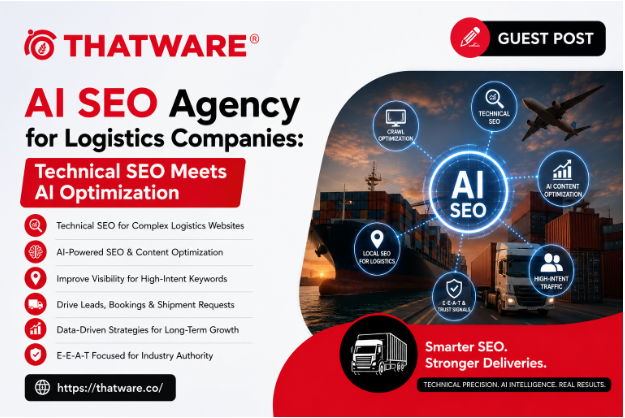
Logistics is a business where precision matters absolutely. Shipments arrive or they don’t. Routes are optimized or they’re not. Costs are controlled or they spiral. The people running logistics companies bring that same precision mindset to every vendor relationship — including their marketing agencies.
Which is why logistics companies tend to be demanding clients. They want to see the data. They want to understand the methodology. They want proof, not promises.
That actually makes them ideal candidates for AI-powered SEO — because the AI approach is inherently data-driven, measurable, and transparent about how decisions get made.
The Logistics SEO Landscape
Logistics as a search category is interesting. The buyers — supply chain managers, operations directors, procurement teams at mid-size and enterprise companies — are sophisticated. They know what they need. They search with specificity. “Refrigerated last-mile delivery New England” is a much more common logistics search query than “shipping company.”
That specificity is good news for logistics brands doing SEO properly, because it means intent is high. Someone searching for refrigerated last-mile delivery in a specific geography is close to a vendor selection decision. Ranking for those queries puts you in front of a buyer who’s ready to evaluate.
The challenge is that logistics searches are often highly localized and highly specific, which means a robust keyword architecture needs to cover a large number of relatively low-volume queries rather than a small number of high-volume terms. Building and maintaining that kind of long-tail coverage is exactly where AI tools create genuine efficiency advantages.
Technical SEO in a Technical Industry
Logistics websites often have specific technical characteristics that require careful SEO management:
Large catalog structures — Freight carriers, 3PLs, and logistics platforms often have extensive service catalogs: dozens of service types, dozens of geographies, dozens of industry verticals. Structuring this content for both user navigation and search engine crawling requires thoughtful information architecture.
Location page management — Many logistics companies have dozens or hundreds of facility and service locations. Each location page needs to be properly differentiated, properly localized, and properly linked within site architecture. The multi-location challenges described elsewhere apply directly here.
Dynamic content challenges — Pricing, availability, transit times — logistics data changes constantly. Managing the SEO implications of dynamic content (canonical tags, crawl settings, content freshness signals) requires technical sophistication.
B2B schema markup — Service schema, organization schema, FAQ schema for common logistics questions — structured data helps AI search systems accurately understand and surface logistics services in relevant queries.
Working with an AI SEO agency that has genuine technical SEO depth — not just content capabilities — is essential for logistics companies navigating these challenges.
Content Strategy for Logistics
Logistics content operates at several levels simultaneously:
Industry-specific educational content — Supply chain managers are always learning. Content that helps them understand emerging topics — intermodal shipping optimization, customs compliance changes, sustainability in freight, warehouse automation — earns respect and builds brand authority among exactly the right audience.
Problem-solution content — “How to handle cross-border compliance for pharmaceutical shipments” is a query that a specific buyer in a specific situation is searching for. Content that answers it precisely captures high-intent traffic from qualified prospects.
Case study and customer story content — Logistics relationships are built on trust and proven performance. Detailed case studies showing specific problems solved, specific metrics achieved, and specific customer outcomes are among the highest-converting content types in the industry.
Regulatory and compliance content — Logistics is heavily regulated. Content covering FMCSA requirements, customs regulations, Hazmat shipping rules, and other compliance topics is genuinely valuable to buyers and earns authority links from industry associations and trade publications.
AI Search in B2B Logistics
When a procurement manager asks an AI assistant to help them compare regional freight carriers for hazardous materials transport in the Southeast, the answer comes from content that AI systems have evaluated as authoritative and relevant.
Being represented in those AI-generated responses requires both the right content and the right authority signals. The best AI SEO agency working with logistics clients is building both in parallel — content that comprehensively answers the questions logistics buyers are asking, and the link and authority signals that make AI systems trust that content as a reliable source.
The Measurement Framework for Logistics SEO
Logistics companies that have invested in organic search want to see the right metrics. A few that matter specifically:
Lead quality from organic — Organic traffic that generates RFQs and qualified sales conversations, not just page views. Integration between SEO analytics and CRM data makes this measurable.
Geographic traffic distribution — Is organic search generating inquiry from the geographies where capacity and capability actually exist? Traffic from markets you can’t serve is noise.
Competitive share of voice — Which logistics keywords are owned by which competitors? Where are the gaps that represent opportunity?
AI citation frequency — For the logistics services and specialties you’re focused on, how often does your brand appear in AI-generated responses?
Logistics companies deserve the same precision in their SEO measurement that they apply to their operations. The right agency delivers it.
